English
 Arabic
 French
 Spanish
 Portuguese
 Deutsch
 Turkish
 Dutch
Dutch
 Italiano
 Russian
 Romaian
 Portuguese (Brazil)
 Greek
Greek
 Download Android App

Wall-Mounted Kitchen Chimney Market Size, Share & Growth Forecast 2033
Networking |
2026-07-24 06:39:12
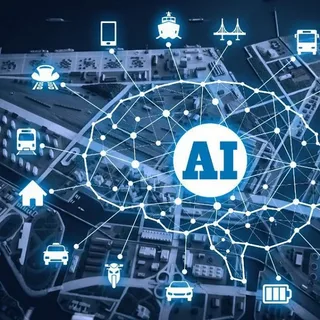
Picture this: a student submits a flawless essay, a freelancer turns in polished copy, and a hiring manager reads a suspiciously perfect cover letter. Somewhere in the background, a quiet piece of software is asking the same question everyone else is thinking — was this written by a human, or a machine? That software is the ai detector, and it has quietly become one of the most debated tools of the digital age.
At its core, an AI detector is a program built to evaluate text and estimate whether it was generated by artificial intelligence or written by a person. Rather than judging meaning or quality, it studies patterns beneath the surface — the rhythm, predictability, and structural habits that differ between human thought and machine-generated language.
AI language models tend to choose the statistically "safest" next word based on patterns learned from massive datasets. This creates writing that often feels smooth, balanced, and a little too consistent. Detectors are trained to notice that unnatural evenness.
Human writing, on the other hand, is wonderfully inconsistent. We ramble, backtrack, and shift sentence length without thinking twice. Detectors look for this natural variation as a sign of authentic human authorship.
The rise of generative AI tools didn't just change how content gets created — it changed how much of it exists. Within a short span of time, the internet filled with AI-assisted essays, articles, product descriptions, and even fake reviews. That flood created a trust problem, and AI detectors stepped in to help restore some sense of accountability.
Educators use detection tools to protect academic integrity, hoping to distinguish genuine effort from a few seconds of prompt-typing.
Editors run submissions through detectors to safeguard credibility, especially as AI-generated misinformation becomes easier to produce and harder to trace.
Companies now vet marketing copy, reports, and even job applications, wanting assurance that the words in front of them reflect ai detector real human insight rather than automated output.
Despite their growing popularity, AI detectors are far from flawless. They operate on probability, not proof, and that distinction matters enormously.
False positives can wrongly flag human writing, particularly from non-native English speakers or writers with a naturally formal, structured style.
False negatives allow cleverly rewritten or "humanized" AI content to slip through undetected.
As AI writing tools become more advanced and better at mimicking natural imperfection, detectors are forced to constantly evolve just to keep up — a technological tug-of-war with no clear finish line.
If you're depending on these tools for real decisions, a thoughtful approach matters more than blind trust.
Use it as a conversation starter, not a courtroom verdict. A flagged result should invite discussion, not immediate judgment.
Never rely on a single tool. Comparing results across multiple detectors reduces the chance of one algorithm's bias skewing the outcome.
Factor in context. Technical writing, non-native fluency, and templated formats can all trigger inaccurate flags.
Expect change. Both AI writing models and detection systems update constantly, so results today may differ from results next month.
Beyond the algorithms and accuracy debates, the popularity of the AI detector reveals something deeper — our collective desire to preserve authenticity in a world where machines can now imitate our voice convincingly. It's less about catching cheaters and more about protecting the value of genuine human expression.
The AI detector isn't a perfect judge, and it was never meant to be. It's a checkpoint, not a verdict — a tool that nudges us toward transparency in an increasingly automated world. Used wisely, it helps preserve something worth protecting: the unmistakable, imperfect, irreplaceable voice of real human thought.
See More Articles: Clicking Here